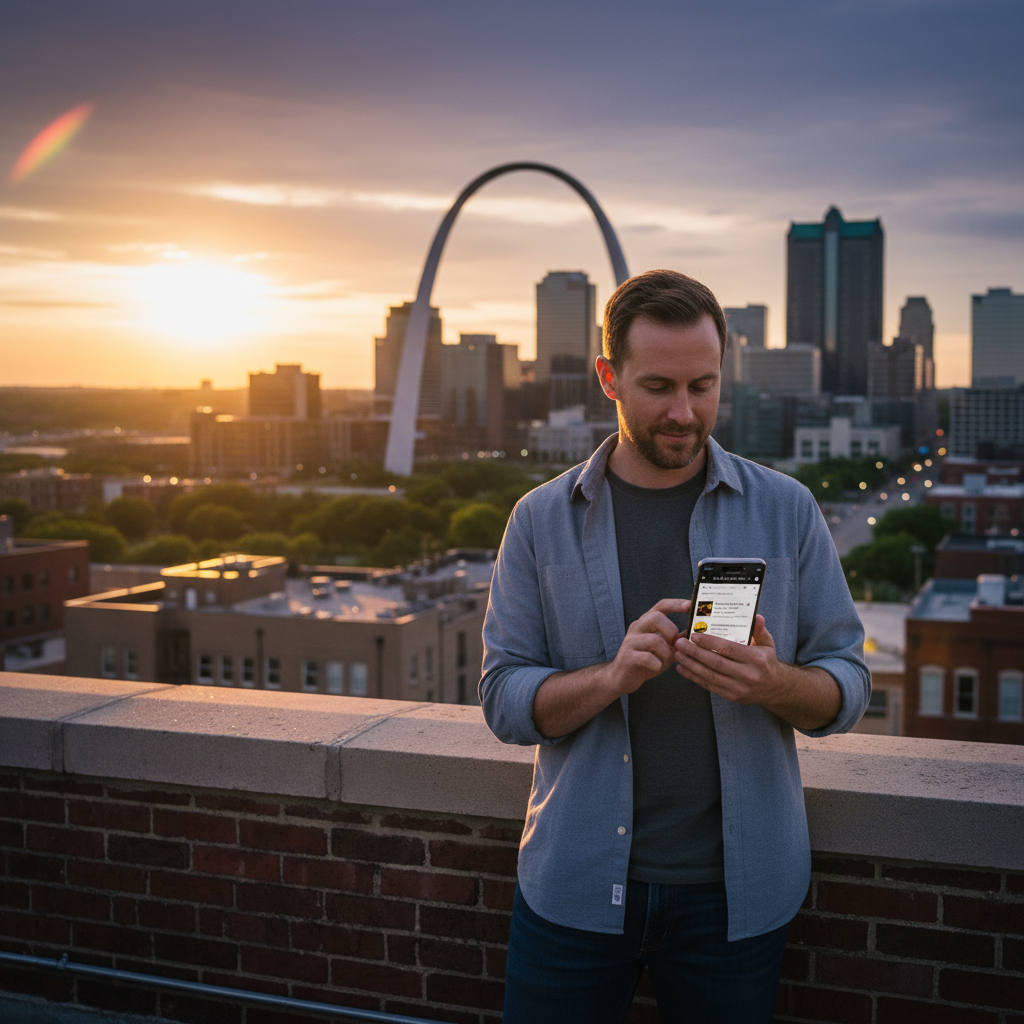
Local SEO Best Practices That Actually Drive St. Louis Business Growth
St. Louis Near Me Directory connects businesses with people searching for services in St. Louis and communities throughout Missouri and Illinois. Reach more cus
Stop Being Invisible. We Fix That! Your St. Louis business deserves more than just existing online — it needs to own its local market niche and convert searchers into paying customers.
It is often observed that a significant percentage of people who search for something nearby on their smartphone visit a related business within a day, highlighting the importance of local search visibility [1]. Yet many St. Louis businesses struggle with inconsistent online visibility, scattered digital presence, and lack adequate crisis management when issues arise.
At St Louis Near Me Directory, we’ve helped countless local businesses build their digital authority through proven local SEO strategies that work specifically in our market. Our highly-rated platform connects businesses with people searching for services throughout Missouri and Illinois, creating what we call “digital bedrock” for sustained local growth [2].
Citations
[1] Understanding consumers’ local search behavior. Google. consumer-insights/consumer-trends/local-search-behavior-shopping-trends/ [2] Small Business Administration. How to Market Your Small Business.
What Makes Local SEO Different in 2025?
Local SEO isn’t just about appearing in Google Maps anymore. It’s about creating a comprehensive digital ecosystem that signals authority to both search engines and local customers. The game changed when AI-powered search started prioritizing businesses that demonstrate genuine community connection and crisis resilience.

Here’s what we’ve learned working with St. Louis businesses: Traditional SEO strategies fail because they treat all markets the same. St. Louis has unique search patterns tied to our neighborhoods, sports seasons, and relationship-driven business culture. Your local SEO strategy needs to reflect these realities.
The Local SEO Maturity Assessment: Find Your Starting Point
Before jumping into tactics, assess where your business stands today. We’ve identified four maturity levels based on working with over 200 St. Louis area businesses:

Foundation Level (0-25% Complete)
Google Business Profile exists but incomplete
Inconsistent business information across platforms
No review management system
Website not mobile-optimized for local search
Growth Level (26-50% Complete)
Complete Google Business Profile with regular updates
Consistent NAP (Name, Address, Phone) across top directories
Basic review collection process
Location-specific content on website
Authority Level (51-75% Complete)
Active community engagement and event participation
Established review generation and response system
Local backlinks from community organizations
Voice search and “near me” query optimization
Dominance Level (76-100% Complete)
AI-powered automation for citations and reviews
Crisis management protocols for GMB issues
Multi-location optimization (if applicable)
Comprehensive local content calendar
Most St. Louis businesses we work with start at the Foundation or Growth level. Our Done-For-You Profile Setup service gets you to Authority level within 30 days, while our Authority Tier Membership is designed for businesses ready for market dominance.
Foundation Phase: Google Business Profile Mastery
Complete Profile Optimization That Actually Converts
Your Google Business Profile is your digital storefront. Businesses with complete profiles are 2.7x more likely to be considered reputable by potential customers. Here’s our St. Louis-specific optimization checklist:
Business Information Accuracy:
Use your full legal business name (avoid keyword stuffing)
Include suite numbers and directional indicators (North County vs. South County matters)
Choose the most specific category available
Add all relevant secondary categories
Visual Content Strategy:
Upload high-quality photos every two weeks minimum
Include team photos (St. Louis customers prefer seeing real people)
Show your actual location and work environment
Add photos from local events and community involvement
Posts and Updates:
Share weekly updates about services, offers, or community involvement
Use local hashtags and location tags
Reference local landmarks and neighborhoods
Highlight participation in St. Louis events and organizations
Advanced GMB Features Most Businesses Miss
Product and Service Listings: Create detailed service pages directly in your GMB profile. Include pricing where appropriate and link to specific landing pages on your website.
Messaging Integration: Enable messaging and set up auto-responses that include your phone number and typical response time. Fast response times can be crucial for converting local searchers into customers [1, 2].
Booking Integration: If you offer appointments, integrate booking directly into your profile. This reduces friction and captures leads before they comparison shop.
[1] Google. (n.d.). Think with Google: Micro-Moments. Retrieved from [2] BrightLocal. (2023). Local Consumer Review Survey. Retrieved from https://www.brightlocal.com/research/local-consumer-review-survey/
Growth Phase: Citations, Reviews & Local Content
The St. Louis Citation Strategy
NAP consistency across local directories builds trust signals that Google uses for ranking. But not all directories matter equally for St. Louis businesses. Focus your efforts on:
Tier 1 Directories (Complete First):
Google Business Profile
Bing Places for Business
Apple Maps Connect
Facebook Business Page
St Louis Near Me Directory (Authority Tier provides guaranteed top placement)
Tier 2 St. Louis-Specific Directories:
St. Louis Regional Chamber directories
Neighborhood-specific business associations
Industry directories with St. Louis sections
Local newspaper business directories
Citation Management Strategy: Manual citation building takes 40+ hours monthly for most businesses. Our Photo Album Management and Video Library Services automate this process while ensuring consistency across all platforms.
Review Generation That Feels Natural
Fake reviews get businesses suspended. Aggressive review requests annoy customers. Here’s what works for St. Louis businesses:
The Follow-Up Sequence:
Day 1: Thank customer for their business (email or text)
Day 3: Ask about their experience and offer to address any concerns
Day 7: If positive response, provide direct link to preferred review platform
Day 14: Follow up once more if no review left
Review Response Framework:
Respond to ALL reviews within 48 hours
Use the customer’s name when responding
Address specific points mentioned in the review
For negative reviews, take the conversation offline quickly
Local Content That Actually Gets Found
Most businesses create content that never gets discovered. Here’s our approach for St. Louis market penetration:
Neighborhood-Specific Pages: Create dedicated pages for each service area you cover. Don’t just list neighborhoods — provide genuine value about each area’s unique characteristics and needs.
Event and Seasonal Content: St. Louis has predictable search patterns around Cardinals season, Festival of Nations, Fair St. Louis, and other annual events. Create content calendars that anticipate these searches.
Local Partnership Content: Feature collaborations with other local businesses, charity involvement, and community projects. These naturally attract local backlinks and signal community connection.
Advanced Phase: AI Automation & Crisis Management
Voice Search Optimization for Local Queries
Voice search behavior differs significantly from typed queries. People ask complete questions rather than using keyword phrases. 58% of consumers use voice search to find local business information, yet most St. Louis businesses aren’t prepared for this shift.
Voice Search Optimization Strategy:
Create FAQ pages answering common voice queries
Include natural language phrases in your content
Target “near me” variations specific to St. Louis neighborhoods
Use schema markup to help voice assistants understand your content
Common St. Louis Voice Queries to Target:
“What’s the best [your service] near Forest Park?”
“Who does [your service] in [specific neighborhood]?”
“[Your service] open now in St. Louis”
“How much does [your service] cost in Missouri?”
Local SEO Automation and AI Tools
Manual local SEO management becomes impossible as your business grows. AI automation tools now handle many routine tasks more effectively than humans:
Citation Management Automation:
Automated NAP consistency monitoring
Bulk citation submission to relevant directories
Real-time alerts for citation changes or removals
Review Management AI:
Sentiment analysis for incoming reviews
Automated response drafts for common review types
Review request automation based on customer behavior
Content Generation Tools:
AI-powered local content suggestions based on search trends
Automated social media posts tied to local events
Dynamic landing page content for different neighborhoods
Local SEO Crisis Management
Google Business Profile suspensions, negative review attacks, and algorithm changes can devastate local visibility overnight. Every St. Louis business needs a crisis management protocol — yet this is the most overlooked aspect of local SEO.
GMB Suspension Recovery Protocol
Immediate Response (First 24 Hours):
Document everything — screenshots, emails, recent changes made
Review Google’s quality guidelines for violations
Submit reinstatement request with detailed explanation
Activate backup marketing channels (social media, email, paid ads)
Week 1-2 Recovery Actions:
Audit all citations for guideline violations
Remove or modify any problematic content
Gather supporting documentation (business licenses, utility bills)
Engage local customers for support if appropriate
Long-term Prevention:
Regular guideline compliance audits
Backup local directory presence beyond Google
Strong email list for direct customer communication
Diversified local marketing strategy
Negative Review Crisis Management
A single viral negative review can damage years of reputation building. Here’s our crisis response framework:
Hour 1-6 (Immediate Damage Control):
Respond publicly with empathy and accountability
Take the conversation private immediately
Alert your team about the situation
Monitor for additional negative sentiment
Day 1-3 (Active Resolution):
Work directly with the customer to resolve the issue
Document all resolution efforts
Encourage satisfied customers to share recent positive experiences
Update policies or procedures if legitimate issues were raised
Week 1-4 (Reputation Recovery):
Increase positive review generation efforts
Share improved processes or changes made
Create content addressing any valid concerns raised
Monitor brand mentions across social media and review platforms
Industry-Specific Local SEO Strategies
Service Area Businesses (Plumbers, Contractors, Consultants)
Service area businesses face unique challenges — you travel to customers rather than having a physical location they visit. This affects how Google evaluates and ranks your business.
Service Area Optimization:
Define specific service areas clearly in GMB
Create separate landing pages for each major service area
Include drive time and service availability information
Use local phone numbers for different regions when possible
Mobile-First Strategy: Your customers often search while experiencing problems (broken pipe, legal issue, marketing crisis). Ensure your mobile experience prioritizes immediate contact options.
Multi-Location Businesses
Managing SEO for multiple St. Louis area locations requires balancing corporate consistency with local relevance.
Location-Specific Optimization:
Unique content for each location (avoid duplicating across sites)
Local staff profiles and community involvement
Location-specific promotions and events
Individual social media presence for major locations
Corporate Brand Consistency:
Standardized review response templates
Consistent service descriptions and pricing
Unified visual branding across all locations
Centralized reputation monitoring
Seasonal and Event-Driven Businesses
St. Louis businesses tied to sports seasons, festivals, or holiday periods need different SEO approaches than year-round operations.
Seasonal Content Strategy:
Create evergreen content that stays relevant
Build anticipation with pre-season content
Capitalize on peak search periods with targeted campaigns
Maintain visibility during off-seasons with related services
Measuring Success: Local SEO KPIs & ROI Tracking
Key Performance Indicators That Matter
Most businesses track the wrong metrics. Here’s what actually correlates with revenue growth for St. Louis businesses:
Primary KPIs:
Google Business Profile views and actions (calls, directions, website clicks)
Local pack rankings for target keywords
“Near me” search visibility
Conversion rate from local traffic to customers
Secondary KPIs:
Citation consistency score across directories
Review velocity and average rating
Local backlink acquisition rate
Voice search feature snippet captures
ROI Calculation Framework
Customer Lifetime Value Approach:
Calculate average customer value over 12 months
Determine local SEO attribution percentage
Track new customer acquisition from local search
Compare investment to attributed revenue
Example ROI Calculation:
Average customer value: $2,400/year
Local SEO attribution: 35% of new customers
Monthly new customers from local search: 12
Monthly attributed revenue: $10,080
Monthly local SEO investment: $1,500
ROI: 572% annually
Common Questions About Local SEO Best Practices
What are the best practices for local SEO?
The most effective local SEO practices focus on Google Business Profile optimization, consistent citations across directories, active review management, and location-specific content creation. Additional practices include voice search optimization, mobile-first design, and local backlink building from community organizations.
Is SEO dead or evolving in 2026?
SEO is evolving rapidly with AI integration and voice search growth, but it’s more important than ever for local businesses. The focus has shifted from keyword stuffing to genuine authority building, community connection, and crisis-resistant digital presence that serves real customer needs.
What are the 3 C’s of SEO?
The 3 C’s of modern SEO are Content, Citations, and Community engagement. Content must serve genuine search intent, citations must be consistent across all platforms, and community engagement signals local authority through reviews, local partnerships, and neighborhood involvement.
How long does local SEO take to work?
Most St. Louis businesses see initial improvements in 30-60 days with comprehensive optimization, but meaningful ranking changes typically require 3-6 months of consistent effort. Businesses starting with strong foundations see faster results than those rebuilding from scratch.
What’s the biggest local SEO mistake businesses make?
The biggest mistake is treating local SEO as a one-time project rather than an ongoing process. Algorithm changes, new competitors, and evolving customer behavior require continuous adaptation and improvement.
Take Action: Build Your St. Louis Digital Authority
Ready to Stop Being Invisible? Your competitors are already investing in local SEO — every day you wait is market share you’re losing to businesses that prioritize Local Visibility.
St Louis Near Me Directory offers the most comprehensive local SEO platform designed specifically for our market. Our Authority Tier Membership provides:
Premium Directory Listings with guaranteed visibility
Done-For-You Profile Setup across all major platforms
AI-powered citation management and review automation
Crisis management support for GMB issues and reputation problems
Local backlink building through our community network
Get Local Visibility that drives real business results. Our Gold, Platinum, and Diamond Membership Plans scale with your growth, ensuring you never outgrow your local SEO foundation.
Contact St Louis Near Me Directory at +1 314-756-8500 or visit our Local SEO Hub to start building the digital bedrock your business deserves.
Find Local success. Build lasting authority. Own Your St Louis Niche.